Room 202-3, Building 30, No. 220 Xianggong Road, Xiangzhou District, Zhuhai City
08.00 AM-09.00 PM
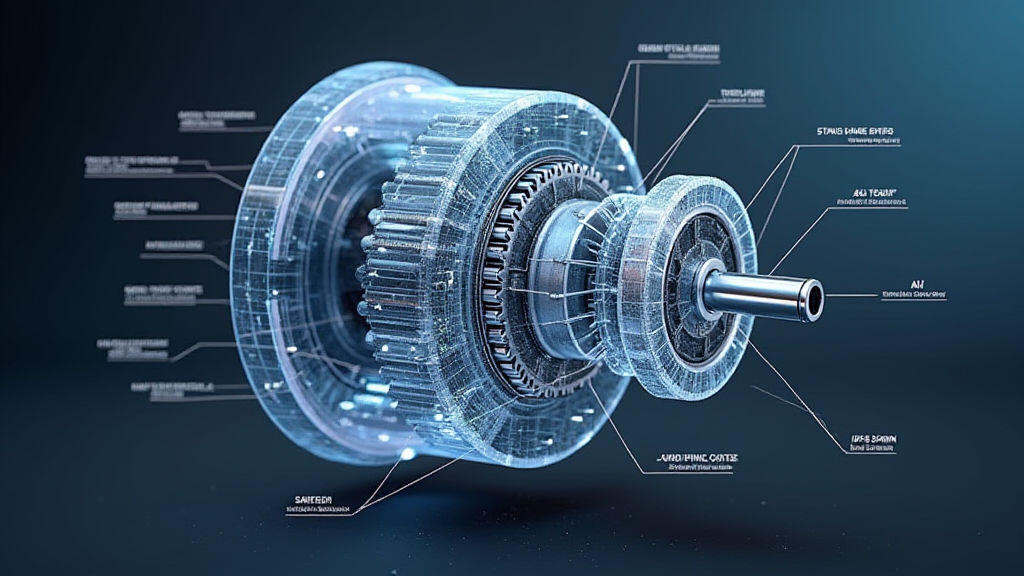
The relentless push for efficiency and automation in manufacturing has placed immense pressure on production lines. A critical component in achieving optimal performance is the gear motor – the workhorse responsible for converting electrical energy into mechanical motion. Choosing the right gear motor isn't just about getting something that turns; it's about meticulously matching power requirements, speed ratios, and other critical specifications to the specific demands of the automated production line. Ignoring this precision can lead to decreased productivity, increased downtime, and ultimately, reduced profitability. In today's rapidly evolving manufacturing landscape, with a growing focus on Industry 4.0 and smart factories, accurate gear motor selection is more vital than ever. This guide provides selection points and calculation methods to ensure effective gear motor matching from an automated production line perspective, highlighting how solutions like those offered by MES-Drive can optimize your operations.
Before diving into calculations, it's essential to understand the factors influencing gear motor selection. These can be broadly classified into:
Accurately calculating the required power and speed ratio is the heart of the selection process. Here's a breakdown of common methods:
1. Torque Calculation:
The fundamental principle is to determine the required torque to overcome the load. The formula for torque (T) is:
T = (Power × 60) / (2πN)
Where:
T = Torque in Newton-meters (Nm)Power = Input power in Watts (W)N = Rotational speed in Revolutions per minute (RPM)π ≈ 3.14159Example: Let's say a conveyor belt needs to move a load with a diameter of 1 meter at a speed of 1 meter per second. The belt's coefficient of friction is 0.2. We first calculate the required force:
Force = 0.2 * weight = 0.2 * (mass * gravity)
Assuming a mass of 50 kg:
Force = 0.2 * (50 kg * 9.81 m/s²) = 98.1 N
Next, we calculate the torque required to overcome this friction:
Torque = Force * Radius = 98.1 N * 0.5 m = 49.05 Nm
This is the static torque required to start the conveyor. In reality, continuous operation requires a higher torque value to account for ongoing friction and potential acceleration. Therefore, we would typically use a safety factor of 1.5 to 2.0. In this case, the required torque would be between 73.57 Nm and 98.1 Nm.
2. Speed Ratio Calculation:
The speed ratio (SR) is the ratio of output speed (Nout) to input speed (Nin):
SR = Nout / Nin
This ratio is determined by the gear reducer's gear arrangement. Different gear combinations provide varying speed ratios. Understanding the relationship between gear ratios and torque multiplication is critical. A higher gear ratio results in lower output speed and higher output torque, while a lower gear ratio results in higher output speed and lower output torque.
3. Power Loss Calculation & Efficiency Consideration
Gear motors aren't perfectly efficient. Some power is lost due to friction in the gears, bearings, and windings. Efficiency is often specified by the motor manufacturer (e.g., 80%, 90%). The formula relating input power, output power, and efficiency is:
Output Power = Input Power * Efficiency
Therefore, to calculate the required input power, simply divide the required output power by the motor's efficiency.
Example: If the required output power is 1000W and the gear motor has an efficiency of 85%:
Input Power = 1000W / 0.85 = 1176.47W
This means the selection should be focused on a motor capable of delivering at least 1176.47W of power at the desired speed ratio.
Selecting the right gear motor can be a complex process. MES-Drive offers a comprehensive gear motor selection platform and a wide range of high-quality gear motors designed for demanding automated production line applications. Our platform provides:
MES-Drive understands the importance of minimizing downtime. Our gear motors are built for durability and reliability, featuring robust construction, advanced cooling systems, and comprehensive maintenance support. MES-Drive's gear motors often incorporate features like integrated sensors and communication protocols, allowing seamless integration into existing automation systems, aligning perfectly with the Industry 4.0 vision of smart and connected factories.
The future of gear motor selection is moving towards smart, connected motors. Integrating sensors and communication capabilities allows for real-time monitoring of motor performance, predictive maintenance, and remote diagnostics. This proactive approach minimizes downtime, extends motor lifespan, and optimizes energy consumption. The advent of AI and machine learning will further enhance this capability, enabling even more sophisticated performance analysis and predictive maintenance strategies.

Selecting the right gear motor for an automated production line is a multifaceted process that requires careful consideration of load requirements, speed ratios, duty cycles, environmental factors, and efficiency. Accurate torque and speed ratio calculations, combined with a thorough understanding of motor characteristics, are crucial for ensuring optimal performance and minimizing downtime. Companies like MES-Drive are proactively addressing these challenges with user-friendly selection tools, comprehensive product offerings, and expert support. As Industry 4.0 continues to reshape manufacturing, the importance of smart, connected gear motors will only increase. Investing in robust and intelligent gear motor solutions is not just about powering machinery; it’s about building a more efficient, reliable, and future-proof production line. In a world where agility and responsiveness are paramount, MES-Drive empowers you to make informed decisions and unlock the full potential of your automated operations.

Leave A Reply
Your email address will not be published. Required fiels are marked