In the fast-paced world of modern manufacturing, efficiency, precision, and reliability are paramount. At the heart of many automated systems lies the gear motor – a critical component responsible for converting rotational motion into the desired torque and speed. Choosing the right gear motor model is a crucial decision that can significantly impact productivity, cost-effectiveness, and overall system performance. This guide provides a comprehensive overview of various gear motor types, their advantages, and key considerations for selecting the ideal solution for your manufacturing needs. We'll also explore how advancements in IoT and Industry 4.0 are shaping the future of gear motor applications.
Understanding Gear Motors: The Basics
Before diving into specific models, let's establish a foundational understanding. Gear motors consist of an electric motor coupled with a gearbox. The motor provides the rotational power, while the gearbox modifies the speed and torque output. This allows for a wide range of applications, from powering robotic arms and conveyor systems to driving precision instruments and industrial machinery. The key parameters influencing gear motor selection include:
- Torque: The rotational force exerted by the motor.
- Speed: The rotational velocity, typically measured in RPM (revolutions per minute).
- Efficiency: The ratio of output power to input power.
- Gear Ratio: The ratio between the input and output speeds, dictating the speed reduction or increase.
- Power: The rate at which work is done; a measure of the motor's overall capability.
Types of Gear Motor Models & Their Advantages
Here's a detailed look at the most common gear motor models used in manufacturing, along with their respective strengths:
1. Spindle Gear Motors:
- Description: These are the most prevalent type of gear motor. They feature a compact design where the output shaft (spindle) protrudes directly from the gearbox.
- Advantages: Versatile, widely available, cost-effective, and easy to integrate into existing systems. They offer a good balance of torque and speed.
- Applications: Conveyor systems, packaging machinery, printing presses, and various automation tasks.
- Considerations: May have limited space for mounting due to the protruding spindle.
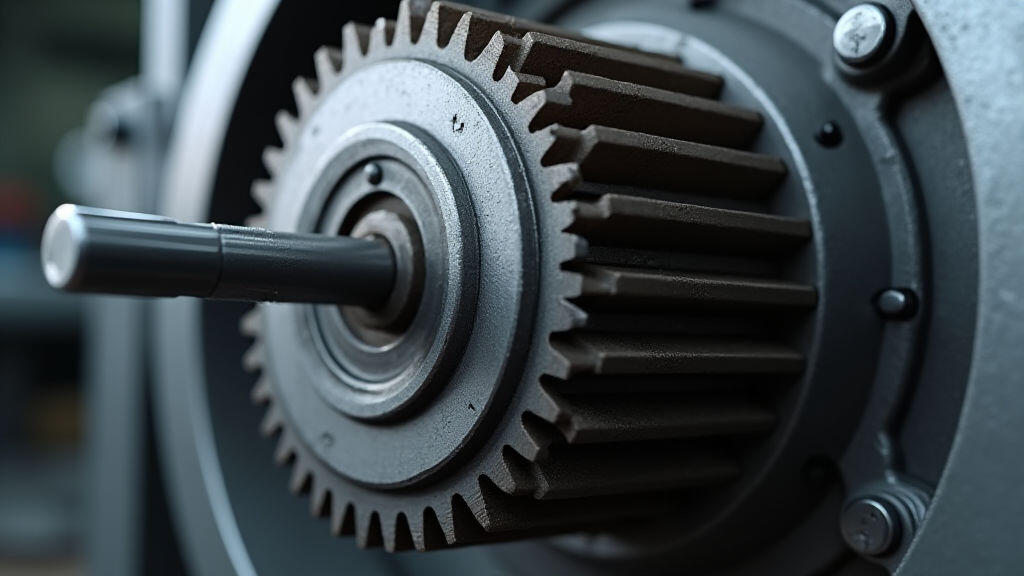
2. Right-Angle Gear Motors:
- Description: These gear motors utilize a right-angle gearbox, resulting in a 90-degree angle between the input and output shafts.
- Advantages: Compact size for the power and torque they deliver. Ideal for applications where space is constrained. Provide a higher output torque compared to simpler gear configurations.
- Applications: Robotics, CNC machines, medical equipment, and applications requiring directional changes.
- Considerations: Can exhibit more noise compared to other types, especially at higher speeds. Hydraulic damping can mitigate noise.
3. Worm Gear Motors:
- Description: Worm gear motors employ a worm and worm wheel combination. The worm is a screw-like gear, and the worm wheel is a helical gear that meshes with it.
- Advantages: High gear ratios, self-locking capability (prevents back-driving) when stationary, quiet operation, and relatively compact size for high torque applications.
- Applications: Heavy-duty applications, positioning systems, elevators, and machinery requiring reliable hold-positioning.
- Considerations: Lower efficiency compared to other gear types due to sliding friction between the worm and worm wheel.
4. Planetary Gear Motors:
- Description: Planetary gear motors consist of a central sun gear, multiple planet gears, and an outer ring gear. The planetary gears mesh with both the sun and ring gears.
- Advantages: High torque density (deliver significant torque in a small package), high efficiency, and compact size. Excellent power transmission capabilities.
- Applications: Robotics, high-precision positioning systems (e.g., telescopes, scientific instruments), and applications requiring high power-to-weight ratios.
- Considerations: More complex design, potentially higher initial cost compared to simpler gear motor models.
5. Helical Gear Motors:
- Description: These gear motors utilize helical gears, which interlock with each other at an angle. This design allows for smoother and quieter operation.
- Advantages: High efficiency, smooth operation, and high load-carrying capacity. Suitable for applications demanding high power transmission.
- Applications: Heavy machinery, industrial pumps, and applications where noise reduction is essential.
- Considerations: Can be more expensive than spur gears.
The Role of IoT and Industry 4.0
The convergence of the Industrial Internet of Things (IIoT) and Industry 4.0 is revolutionizing gear motor applications. Modern gear motors are increasingly equipped with sensors and connectivity features, enabling real-time monitoring of performance parameters such as torque, speed, temperature, and vibration.
This data can be leveraged for predictive maintenance, allowing manufacturers to anticipate potential failures and schedule maintenance proactively, minimizing downtime and maximizing equipment lifespan. Furthermore, remote monitoring and control capabilities enhance operational efficiency and streamline troubleshooting. MES-Drive, for instance, offers gear motors with integrated IoT capabilities, providing valuable insights into system performance via a centralized dashboard.

Choosing the Right Gear Motor: Key Considerations
Selecting the appropriate gear motor model requires careful evaluation of specific application needs. Consider the following factors:
- Load requirements: Determine the required torque and speed for the application.
- Space constraints: Assess the available space for motor and gearbox integration.
- Operating environment: Consider temperature, humidity, and exposure to dust or chemicals.
- Efficiency requirements: Optimize for energy consumption based on operational costs.
- Noise levels: Evaluate acceptable noise levels for the application.
- Budget: Establish a realistic budget for initial investment and ongoing maintenance.
Conclusion: The Future of Gear Motors in a Connected World
Gear motors are indispensable components in modern manufacturing, and their importance is only set to grow. The advancements in gear motor technology—particularly the integration of IoT capabilities – are empowering manufacturers to achieve greater efficiency, reliability, and control. As Industry 4.0 continues to unfold, gear motors with smart features will play a pivotal role in driving automation, optimizing production processes, and enabling predictive maintenance. Manufacturers who embrace these advancements, leveraging solutions like those offered by MES-Drive, will gain a significant competitive advantage in the evolving landscape of global manufacturing. The increased data accessibility and predictive maintenance capabilities offered by IoT-enabled gear motors are not just improving efficiency, they are transforming manufacturing from reactive to proactive, leading to a future of continuous improvement and optimized performance.

Leave A Reply
Your email address will not be published. Required fiels are marked