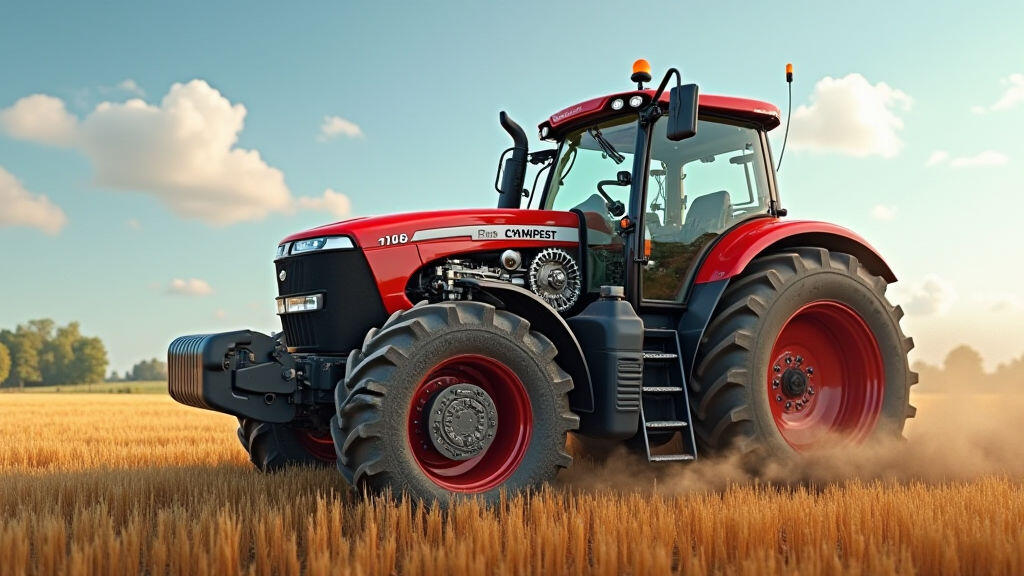
Agricultural machinery has evolved rapidly over the past few decades, turning simple tools into sophisticated powerhouses. At the heart of many of these machines lies the gear motor—a compact, reliable component that delivers the torque and speed required for tasks ranging from plowing to harvesting. Understanding the different gear motor models available, along with their particular strengths, can help farmers, engineers, and manufacturers make smarter choices, reduce downtime, and improve overall productivity.
Gear motors come in several configurations, each designed to satisfy particular performance needs. While the terminology may sound technical, the core idea is simple: a motor turns a gear train to produce either higher torque or higher speed, depending on the application.
These motors combine the motor and gearbox into a single unit. The output shaft directly feeds the machinery or the next stage in the power chain. Direct-drive designs are common in compact machinery such as handheld tillers, and they offer instant torque response without the need for an additional coupling.
The most widely used gear motors in tractors and combines feature a planetary gear set integrated within the motor housing. Planetary gears can deliver high torque in a small footprint, making them ideal for suspension systems, hydraulic pumps, and power take-offs (PTO) that require smooth, high-power output.
Helical gears provide quieter operation and smoother power transfer, which is advantageous for precision equipment like seed drills and sprayers. They also handle higher loads with fewer vibrations.
Although less common, some niche agricultural tools use reciprocating gear motors. They convert linear motion to rotational output (or vice versa), suitable for specialized hydraulic actuators and certain type of pneumatic pumps.
Beyond gear design, gear motors differ in the materials used for components like bearings, gears, and housings. The selection often balances cost, durability, and environmental exposure.
Choosing the appropriate gear motor involves several factors that meet the specific demands of your tasks.
While gear motors are critically important components, modern designs bring a set of distinct benefits to agricultural production:
Even the best gear motor suffers if not properly maintained. Here are straightforward ways to keep them running smoothly:
The agricultural landscape is rapidly shifting toward electrification and automation. Gear motors that support electric drives, efficient torque control, and wireless communication are the future. Some manufacturers are introducing modular gear motor kits that can be updated with newer firmware without replacing the entire unit. This future‑ready approach aligns perfectly with the trending event: the global push for sustainable farming solutions as highlighted by recent international climate conferences.
Gear motors may be small, but they are the backbone of modern agricultural machinery. By understanding the various types—direct-drive, planetary, helical, and reciprocating—along with material choices and specific farm requirements, users can select components that deliver optimal performance, durability, and efficiency. The advantages of contemporary gear motor models—compactness, low vibration, precision, and smart connectivity—are crucial enablers for tomorrow’s sustainable farming initiatives.
As the world pivots toward greener, smarter agriculture, gear motors continue to play a pivotal role. Their evolving designs and digital integration promise to reduce operational costs, increase yields, and support the global transition to more resilient farming systems.

Leave A Reply
Your email address will not be published. Required fiels are marked